The Aquatherm fabric itself does look rubbery, but is about the same thickness as a rashie, with the advantages of being windproof & ultra-breathable. Rob & I immediately ordered samples to test & we have both been blown away by the performance of these garments. Without going into the serious details of each item in the range, the overriding features are fit (no rubbing caused by wearing a top that was designed for a surfer), design (how would you like a set of hand warmer pockets & a designated VHF sleeve in your next PFD?), and material (Aquatherm is awesome stuff, breathable, comfortable, incredibly light & pretty groovy....)
Friday, 11 July 2008
Reed Chillcheater Gear - Welcome to the future....
The Aquatherm fabric itself does look rubbery, but is about the same thickness as a rashie, with the advantages of being windproof & ultra-breathable. Rob & I immediately ordered samples to test & we have both been blown away by the performance of these garments. Without going into the serious details of each item in the range, the overriding features are fit (no rubbing caused by wearing a top that was designed for a surfer), design (how would you like a set of hand warmer pockets & a designated VHF sleeve in your next PFD?), and material (Aquatherm is awesome stuff, breathable, comfortable, incredibly light & pretty groovy....)
Wednesday, 25 June 2008
Surf Kayaking
My journey into this spectacular sport began about 5 years ago with a whitewater creek boat, a Wavesport Score, which has very similar handling characteristics to a modern surf kayak, minus the fins. As a paddler who learnt the skills of surfing a kayak in a cumbersome sea kayak, this boat seemed to me to be about as good as things could get, with it’s maneuverability & speed on a wave face. Along came the first of Ross’ surf kayaks & I quickly realised just how much more was possible using a craft explicitly designed for the surf. In my old playboat, I would ride the initial face, then inevitably get caught in the break & bump along bracing, surfing backwards, generally out of control. Make no mistake, this is great fun, however it is really only replicating whitewater paddling in the surf zone. Whitewater paddlers will argue that this in itself is terrific fun, but it’s not what turned me on. As John Lennon said, whatever gets you through the night, it’s alright…..
A true surf kayak with fins allows the paddler to carve like a board rider, whilst also getting the most out of every wave.
The Valley Storm in action at Cornwall, UK (photo Maurice Leyland)
So, for a sea kayaker wanting to make the jump to surf kayaking, how do you get started?
Firstly, you’ll need a reasonably good skills base. You’re obviously going to do a lot of swimming I you haven’t yet managed to crack a decent roll. Rolling a kayak isn’t the black art many make it out to be. I’ve often instructed paddlers through their first ever roll, & their normal comment is ‘is that all there is to it..?” Get yourself some good instruction (www.balancedboater.com) and depending on how flexible you are, you will find you’re cranking out a decent roll within a few weeks.
Secondly, undertake a careful study of the etiquette of surfing. There is an excellent guide HERE. Watch how surfers treat each other (maybe don’t do this at Maroubra), get to know the rules of the break & when you do finally get out there, OBSERVE them.
Finally, get out in a controlled environment with either an instructor or a competent paddler & have a go. Start small – even playing in the broken whitewater is a good learning experience for a novice – and build slowly. Check the weather & surf forecasts & pick the days when you’re going to be inside your limits, and get out among the waves. Wear a helmet – if you don’t need a head, you don’t need a helmet.
Where is the sport headed? With the rivers in this dry continent slowly evaporating, it’s a good bet that surf kayaking will develop into at least as mainstream a sport as whitewater kayaking in the years to come. In Australia we’re blessed with a wealth of surf beaches free of crowds, so there is no limit to the development of the sport.
At Expedition Kayaks we have just begun to import the Storm surf kayak from the UK, and it is a real performer. Check it out on the Surf Kayaks page of our website.
The Mega boats at Jervis Bay Kayaks are also worth a look - their range is much wider & includes composites. Above all, don't for a minute think that surf kayaking is a high-performance sport for the young & reckless. With a minimum of instruction & experience, you can develop your sea kayaking skills to a level you couldn't have imagined possible, with the help of a well-designed surf kayak.
Monday, 16 June 2008
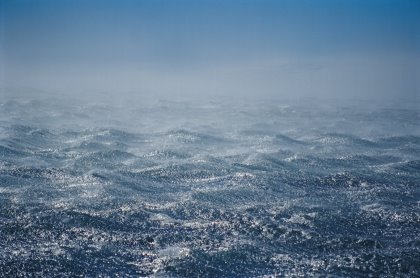
Wind......
Thursday, 12 June 2008
Speed - the great furphy for sea kayakers
So, over the last month or so, I've been doing a 12.5km Monday morning paddle from the Cooks River boat ramp in Kyeemagh, to Dolls Point in Botany Bay, & back. My aim has been to push a little bit harder than usual, in an effort to get a bit fitter, and also to see if I can discern any speed difference in the various kayaks we at Expedition Kayaks are selling. I cruise 'plus 10%' at about 8.5km/h, which is faster than I would have paddled on any club or instruction trip for the past 3 years. In fact, if I was to head off on a club paddle at this pace I reckon I'd probably exhaust at least half of my fellow paddlers within half an hour.
Conditions have been pretty much flat & windless, so I haven't had to contend with anything skewing the results of my test times, and the conclusions are really interesting. The Force 5, which really & truly is an amazingly fast boat in sea conditions, is actually only about 300m per hour faster than the Norkapp when paddled on the flat. The Norkapp is not designed for flat water racing - it's a dyed in the wool sea kayak. The Assateague, which I love paddling in anything remotely challenging, but which I would have considered to be a reasonably slow boat on flat water, is only about 100m/hour slower than the Nordkapp on flat water. The Aquanaut, which is blowing away many 5.8m sea kayaks in sea conditions, is only fractionally faster than the Nordkapp, on the flat. Think about those results - effectively it means after 12.5km of paddling at a rate above that which you would find on just about any club or social paddle, these kayaks are all going to arrive at the same destination within about 4 minutes of each other. I have deliberately italicsed the pertinent parts of my analysis, to attempt to show the absolute codswallop that is behind the idea that boat A is fast, & boat B is slow. The simple fact is, if you can get some sea skills through a good commercial instructor like Rob, or in a club environment, you will a) have a more efficient forward stroke and therefore be able to paddle more efficiently (& therefore faster); and b) better be able to take full advantage of the environment around you in the sea, to propel your kayak faster.
A classic example of my speed furphy theory is the Montauk, a boat we sell for smaller paddlers, which is just 16ft long. It is a lovely design, with a Swede form giving it excellent hull speed for it's overall waterline length, but I would again have considered it to be a reasonably slow boat. I took a ski paddler out for a test paddle in the Montauk a few weeks ago - she was small in stature but big on power & technique - and in a 4km return paddle on the sea she had me going well above my comfort level just to keep up (I was in the Currituck, which is another boat that performs beautifully in the sea, but is a bit sluggish on flat water). Anyway, she proved once & for all that the Montauk is definitely not slow in the hands of someone with a good forward paddle technique.
So, think twice about the boat if you're worried about keeping up, or going faster - look instead at your own technique, and think hard about whether you're in the sport to race (in which case, go buy a racing ski, or if you really want to go fast, a Rapier 20), or to smell the roses......
Tuesday, 27 May 2008
Circumnavigating Erakor Island - almost....
Each attempt was thwarted by a particularly irresistable reef break sitting 40m off the eastern edge of the island, which just had to be given a go.
So, after riding the break for an hour at a time on each of my first three attempts, I had to forego the odyssey & hopefully return another day to tick this milestone of a paddlers career.For those of you hoping to train for such a feat, the stats are below:
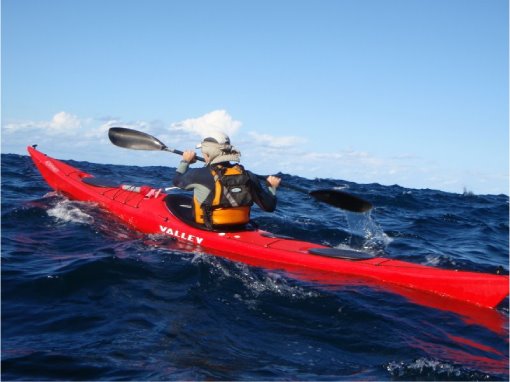
Erakor Island, Vanuatu
Circumnavigation distance - 1.8km
Dangers - Relaxation induced apathy, dodgy sit on tops, paddles with one blade on backwards, sunburn.
First acheived - 704AD by Midou Tiki in timber, coconut hulled Valley Native Canoe (VNC)
Thursday, 17 April 2008
Keith Oakford in the Aquanaut RM
The slideshow above shows a small slice of the action, on a night where most of the group were wide eyed. Keith had a hell of good time in his boat, as evidenced by his play in the mess, & is stoked with the Aquanaut.
Keith is a Bass Strait veteran, & a very active sea instructor with the NSWSKC.
Monday, 14 April 2008
Valley Composites
The Velocimiser Sea Kayak Foil Rudder
After two solid years of R&D, we can finally announce a series of successful sea trials of our new foiling sea kayak rudder, The Velocim...
-
A recent posting on the Sea Kayak Forum which diverted into a discussion on the usefulness of shark repellent devices got me thinking about ...
-
Surfski paddling on the new breed of ocean racing skis, has moved very quickly in recent years from the exclusive domain of elite surf ...
-
The Nadgee Solo - Legendary iconic Australian sea kayak, designed to track hard and true, keep you safe from waves and nasty seas, and...