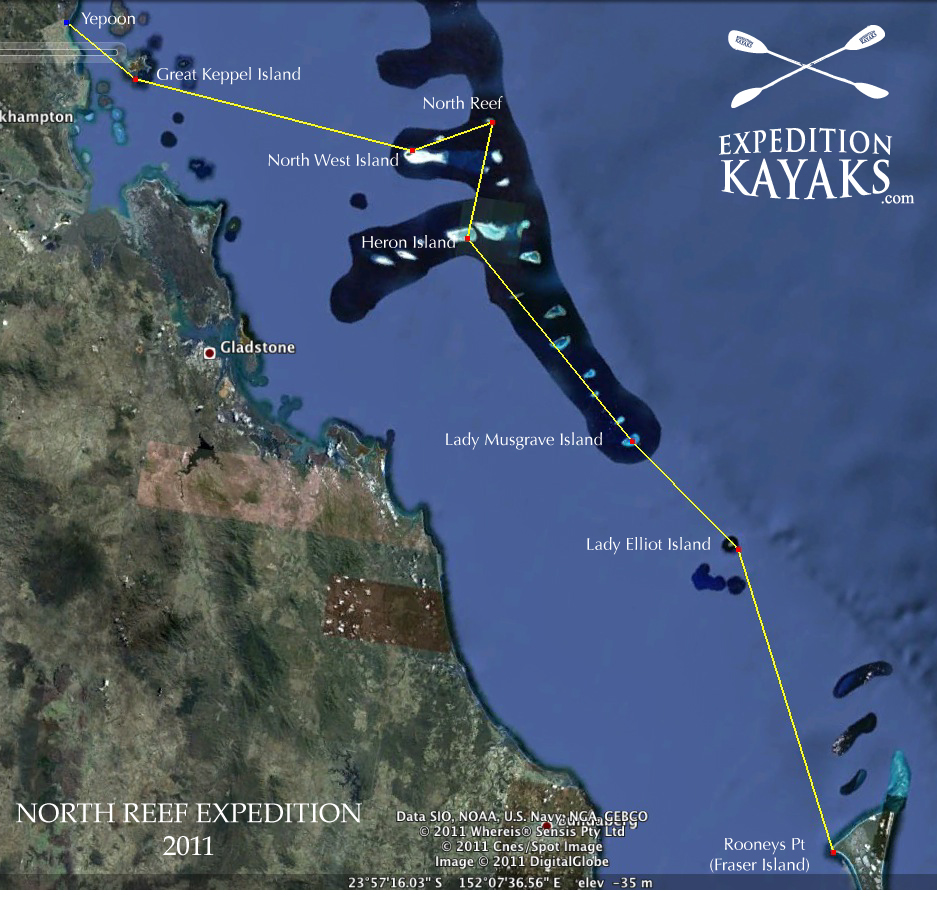
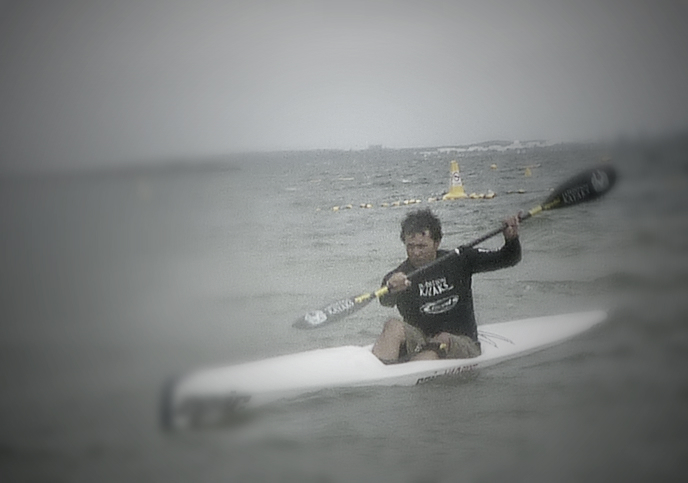
Our North Reef Expedition is just a fortnight or so away, and we've added a new blog site to record the lead up & progress of the trip.
The blog can be seen HERE. If you're really bored & want to see my training regime for the last four months, then wait until you need a good reason to get sleepy & troll back through - it's really been kept updated for me as a motivator, recording some of the training in my own buildup to the trip.
The interesting stuff will begin from next week!
The offer is open to anyone out there with info on the area to give us a shout, all advice & tips are welcome.
Thursday, 30 June 2011
Wednesday, 29 June 2011
The Valley Etain - Reviewed by SeaKayaker Magazine
SeaKayaker Mag in the US have done their own review of the new Valley Etain. We have called it the Roswell boat becuase they were virtually all gone before they landed in the last shipment, and the paddler response from thos e who bought the first batch is very positive.
Click HERE or the image above to read the review.
We have one Carbon Kevlar boat in stock & another dozen landing in early September.
Click HERE or the image above to read the review.
We have one Carbon Kevlar boat in stock & another dozen landing in early September.
Thursday, 23 June 2011
Westerlies
Yesterday was the first opportunity Chris, Rob & I had to get on the water, all in our Tarans, with nearly all of the fit out complete for our expedition. We were hoping for a nice 15 knot wind day, some head & following seas & a 35-40km paddle just to get a feel for the boats & our group cruising speed.
The best laid plans etc etc meant that instead we were served up a day with a honking westerly, the most dangerous local wind for paddlers. Rather than mess around doing a slog inside the bay, we decided to run out to sea & stay under the lee of the cliffs as far north as we could in an hour-forty, mindful of the slog we'd encounter on our return west to La Perouse.
Westerlies in Sydney do strange things in the coastal environment. Where we could tuck under the cliff line we had sometimes refracting following winds, sometimes headwinds. Where we broke into open sections like Maroubra & Coogee, we were hit with the sledgehammer of 20 knots plus, from the beam, producing demanding paddling requiring a good level of fitness & strength to negotiate.
Westerlies tend to magnify the further away you get from land, so it's not very long before you're past the point of being able to make it back to safety. The dangerous thing about these winds is the very small margin for error. If a problem occurs, you'll very quickly be blown to seaward and then face a tough job getting back to the lee of the land.
How tough? The graph below shows the speed vs heart rate of my paddle, showing the brief blast out to Cape Banks at the beginning & then various wind influences as we made our way north & then south again.
The best laid plans etc etc meant that instead we were served up a day with a honking westerly, the most dangerous local wind for paddlers. Rather than mess around doing a slog inside the bay, we decided to run out to sea & stay under the lee of the cliffs as far north as we could in an hour-forty, mindful of the slog we'd encounter on our return west to La Perouse.
Westerlies in Sydney do strange things in the coastal environment. Where we could tuck under the cliff line we had sometimes refracting following winds, sometimes headwinds. Where we broke into open sections like Maroubra & Coogee, we were hit with the sledgehammer of 20 knots plus, from the beam, producing demanding paddling requiring a good level of fitness & strength to negotiate.
Westerlies tend to magnify the further away you get from land, so it's not very long before you're past the point of being able to make it back to safety. The dangerous thing about these winds is the very small margin for error. If a problem occurs, you'll very quickly be blown to seaward and then face a tough job getting back to the lee of the land.
How tough? The graph below shows the speed vs heart rate of my paddle, showing the brief blast out to Cape Banks at the beginning & then various wind influences as we made our way north & then south again.
Check out the final 5km, just under an hour of serious slog into a wind which had come up to a steady 25-30 knots, with more than 15km of fetch to throw up nasty little head seas.
Wind strengths get thrown around kayakers blogs, tall stories in the bar & into folklore, but it's important that we all remember just how serious a wind above 25 knots can be. Local observation stations are usually a poor indicator of wind strength for a kayaker - part of the reason they get exaggerated so badly in paddling stories. A wind recorded 60m up on North Head is not going to be anywhere near as strong at water level for a kayaker, so we can be lulled into thinking an observation reading is really what we were out in, when it's rarely the case. The airport station at Sydney is however a good reliable source as it's down at ground level. Yesterday during our paddle it registered between 19 & 30 knots, with the highest readings pretty much coinciding with our rounding of Cape Banks for the trip back into the wind. The best laid plans. I personally find making headway once things hit 30 knots very physically & mentally taxing, & beyond a very short period of time, nearly impossible.
I'm pleased to report that aside from the dastardly end to the trip, we managed a very sustainable 8.4kmh despite the unhelpful conditions. I also spotted an early season Humpback off the coast of St Micks Golf Course. It was a good start as a team to our expedition planning.
Tuesday, 21 June 2011
North Reef Expedition - the countdown begins...
The iconic image of a lone lighthouse on a tropical island, some 110km off the Queensland Coast, makes a tempting target for a sea paddler. Unprotected by the reef, and subject to shifting & largely unpredictable currents which give birth to East Australian Current, the area is a renowned rough water seaway best avoided when things aren't all lined up in the mariners' favour.
Throw into the mix a fairly set single passage taking advantage of prevailing, but generally very strong trade winds, three separate crossings in open, demanding water exceeding 70km, and a series of island reefs to safely negotiate in the face of breaking ocean swell, a total distance pushing towards 400km, and all the ingredients are there for a brilliant & demanding short term expedition.
Standing high on the shoulders of Gary Forrest, Paul Wilton & Eddie Safarik who last year safely negotiated the route from Fraser Island to Heron Island, Chris James, Rob Mercer & I will shove off the northern shore of Fraser Island next month attempting to push a couple of islands further up the Bunker chain, with the aim of reaching the distant North Reef Lighthouse. As far as we're aware, neither North Reef or it's close neighbour North West Island have ever been reached by kayakers before.
Our support so far from the good people at Queensland National Parks has been brilliant, as has the welcome promised by Peter Gash & his team on Lady Elliot Island & John Johanson & the staff on Heron Island.
I'll be posting updates over the coming month on various aspects of the trip, including the training we've all undertaken & various destination islands. The expedition will be blogged in real time with updates live via a Spot Messenger & sat phone feeds, so everyone will be able to follow our progress.
Any information on these islands & waterways would be very much appreciated, please contact us if you have anything to offer!
Throw into the mix a fairly set single passage taking advantage of prevailing, but generally very strong trade winds, three separate crossings in open, demanding water exceeding 70km, and a series of island reefs to safely negotiate in the face of breaking ocean swell, a total distance pushing towards 400km, and all the ingredients are there for a brilliant & demanding short term expedition.
Standing high on the shoulders of Gary Forrest, Paul Wilton & Eddie Safarik who last year safely negotiated the route from Fraser Island to Heron Island, Chris James, Rob Mercer & I will shove off the northern shore of Fraser Island next month attempting to push a couple of islands further up the Bunker chain, with the aim of reaching the distant North Reef Lighthouse. As far as we're aware, neither North Reef or it's close neighbour North West Island have ever been reached by kayakers before.
Heron Island
We'll all be paddling Rockpool Tarans, a boat used to great effect recently by Jeff Allen & Harry Whelan to smash the record for an Around Ireland circumnavigation. We aim to follow a line from Rooneys Point on Fraser Island, 88km out to Lady Elliot Island, then a further 45km to Lady Musgrave, followed by 70km across the no-landing marine islands in the chain to Heron, then on to North Reef, North West Island & hopefully back to the mainland via a 78km crossing to Great Keppel.Our support so far from the good people at Queensland National Parks has been brilliant, as has the welcome promised by Peter Gash & his team on Lady Elliot Island & John Johanson & the staff on Heron Island.
I'll be posting updates over the coming month on various aspects of the trip, including the training we've all undertaken & various destination islands. The expedition will be blogged in real time with updates live via a Spot Messenger & sat phone feeds, so everyone will be able to follow our progress.
Any information on these islands & waterways would be very much appreciated, please contact us if you have anything to offer!
Friday, 3 June 2011
Rough water in Sydney Harbour…?
Rough water is definitely in the eye of the beholder. The most sobering thing about it as a paddler with a breadth of sea experience, is that you look back at what you perceived to be 'rough' in your first few years of development, remember the white knuckle fear as you bounced around in confused water, & realise how risk averse you've become when you now consider the same sort of fizz to be nothing more than a spot of fun to mess around in. It's probably no less an obstacle, but the respect has long dissipated as bigger & meaner conditions hone your skills.
By definition, a harbour is, well, a harbour. It's a protected waterway safe for vessels in nearly all weather. In Sydney Harbour both the indigenous & later occupying settlers chose well, it's a spectacularly well protected place, safe from the predominating long period southerly swells that often blitz the surrounding coast.
I would say I've seen maybe a dozen days of challenging paddling in or around the entrance to Sydney Harbour in all my years paddling the harbour. Rob has a great yarn about smashing his wooden boat to pieces on the steps of the Neilsen Park Kiosk on one day when the swells wrapped all the way in to the bay. Yet only a kilometre or so either direction of the heads outside the safety of the harbour you'll nearly always find a very different proposition, where high cliffs & deep water combine to produce a fantastic variety of dynamic water.
The dozen or so big water events I've seen inside the harbour coincide with a strong & persistent wind, coupled with some very long, powerful swell, usually with a bit of east in the direction.
One such day materialised last Tuesday, & Rob, Dave Rowan & Chris got some great video of the ocean conditions to seaward (top of page) that produced spectacular breaking surf off Sow & Pigs Reef, smack bang in the middle of the main channel of the outer harbour. The reef was going off, with multi directional breaking water giving the guys more than a few long, bouncing, broadsiding rides through the whitewater.
By definition, a harbour is, well, a harbour. It's a protected waterway safe for vessels in nearly all weather. In Sydney Harbour both the indigenous & later occupying settlers chose well, it's a spectacularly well protected place, safe from the predominating long period southerly swells that often blitz the surrounding coast.
I would say I've seen maybe a dozen days of challenging paddling in or around the entrance to Sydney Harbour in all my years paddling the harbour. Rob has a great yarn about smashing his wooden boat to pieces on the steps of the Neilsen Park Kiosk on one day when the swells wrapped all the way in to the bay. Yet only a kilometre or so either direction of the heads outside the safety of the harbour you'll nearly always find a very different proposition, where high cliffs & deep water combine to produce a fantastic variety of dynamic water.
The Sow & Pigs washing machine
The exposed headlands around Middle Head can get some refracted swell, but it's been greatly broken down by the time it gets in there & has neither the wavelength or associated speed to produce genuine ocean conditions.The dozen or so big water events I've seen inside the harbour coincide with a strong & persistent wind, coupled with some very long, powerful swell, usually with a bit of east in the direction.
One such day materialised last Tuesday, & Rob, Dave Rowan & Chris got some great video of the ocean conditions to seaward (top of page) that produced spectacular breaking surf off Sow & Pigs Reef, smack bang in the middle of the main channel of the outer harbour. The reef was going off, with multi directional breaking water giving the guys more than a few long, bouncing, broadsiding rides through the whitewater.
Chris heading across Sow & Pigs Reef
Rob being lined up by a rolling Piggie wall
Thursday, 26 May 2011
New - Sea Kayak Essentials DVD
These guys can paddle, possessing elegant rough water skills & showing them off in a well presented instructional style that should inspire paddlers to get out & mix it up among the whitewater.
It features the tide race footage we've all come to enjoy from the This is the Sea series, & enough dynamic water to keep everyone happy, mixed happily with tips aimed at paddlers with a decent grip on their skills, looking for that extra expert advice on how to put it all together.
We have stock on the shelf for $39.95 including delivery nationally, through our online store.
Wednesday, 25 May 2011
Expedition Fitness for the time poor….
How to meet challenge of preparing for a very committing expedition, with basically nowhere to hide once it's underway, based on historical weather data that shows extremely demanding conditions to be the stock standard daily fare, when you have very small windows of time to devote to training? My family commitments mean weekends, early mornings & evenings are out, so I have had to work out a routine of meaningful fitness preparation around lunch hours & the odd gap where I've got an hour or two during the day.
This has been the problem for me to solve over the past couple of months since agreeing to take part in a trip with Rob & Chris James which kicks off in July, and something I've gone far & wide in search of expert advice to try to overcome.
Chris & his mate Chris Walker, who won the sea kayaking division in the recently completed Harbour Series, suggested an approach favoured by a guy named Tim Ferris in his book 'The Four Hour Body', which despite sounding like some horrendous Anthony Robbins self help bible, gives some very simple & sound advice.
Essentially, the message is to measure. Measure your weight, your times on fitness paddles, your routines, heart rate output, you name it. Measuring gives you a start point, a line of progress & a goal, which any good navigator will tell you is the key to getting from A to B in one piece.
So what to do when you're basically limited to 60 to 90 minute sessions, for a trip that will have several legs where we'll spend upwards of 12 hours on the water?
Asking around a bevvy of fitness experts with performance paddling experience, there is universal agreement that interval training is king. That means spending intervals of time on a fitness paddle changing up a gear & pushing yourself above the general pace that you're aiming for. I've developed a 60 minute paddle where I will go hard for 3 minutes, every 10 minutes, & each time focus on something different, such as form, speed, cadence, leg drive etc. I'm rigged up with a heart rate monitor & have a GPS perched in my eye line, which records my speed & output, as well as telling me how fast I'm recovering. Improving fitness is all about improving recovery, so measuring these things in a palpable way tells me if I'm making progress. My aim is to get this up to 6 minutes on overdrive, with two minutes rest in between, for an hour. It's a goal Max set me which seems pretty hard core!
Here's a readout of my heart rate on a 60 minute paddle where I covered 11.3km, showing the spikes in effort around the intervals, and my recovery rate.
Ideally, those 150-160bpm spikes should be back around 145bpm, and the recovery rates in between back to 125-130bpm by the time of the trip.
I bought one of Dean Gardner's Kayak Pro Ergo machines, which is a phenomenal piece of kit for tuning your stroke & power, and have been spending an hour every other day working on the highest resistance setting trying to improve my resistance strength. That saves me oodles of time, as a one hour training paddle is realistically a three hour absence from the office by the time I get to & from the water.
Chris has one as well & we're comparing notes on how we're both progressing, which is a gentle competition to keep us both motivated.
I'm also doing a lot of swimming, which has been recommended to me by guys with elite athlete training backgrounds like Rob Walker, as being the closest thing to replicating paddling that you can do. I'm now punching out 2km a few times a week, constantly aiming to beat my previous times, and finding the improvement is accelerating as I keep up the effort. Swimming is one of those things you don't have to persevere with for long before it becomes way easier.
I've continued my quest to get my forward stroke in good order, with one-on-one lessons from experts in ski racing picking out the small flaws & giving me something to aim at.
I've used these past couple of months to build a base of fitness that will soon allow me to start working on the other aspects of expedition paddling. At the core of this is obviously getting out & doing a few days in loaded boats, in demanding conditions & working against weight resistance. Going against general sea kayaking lore, this is the sort of paddling that contemporary training wisdom says is really the icing on the cake for an expedition, the stuff you should get your head around, but not necessarily the paddling that will make your body any stronger. This is due to the big toll it takes if repeated over & over. That was advice I was pleased to hear, but nonetheless I'm intending to tune up with some long open water paddles prior to leaving.
I was lucky enough to spend loads of time with Les Allen & Ian Pexton talking about the sorts of preparation they did mentally for their multitude of big committing trips. Of course in Rob I have a guy who's paddled the majority of the East Coast, & in Chris a brilliant all round paddler with heaps of experience in & around Bass Strait. It's not a bad situation for me, not having done any multi day expeditions since before my eldest daughter was born in 2004, & one I'm fortunate to be in.
It's been an interesting couple of months & has opened my eyes to just how much performance you can achieve if you commit to an organised training regime, not to mention awakening the competitive instincts that I thought I'd left on Coogee Oval with my boots & expert phrasebook of sledges.
I'm acutely aware that I'm paddling with two guys who are real athletes & want to make sure I leave nothing in my preparation that could see my performance suffer when we're inevitably under the hammer. And you know what, all this hard work is also a lot of fun.
Time will tell if it all works; I might end up in a screaming heap after my first hard day on the trip, but I'll only know that for sure once I'm there. It's been terrific so far to be working towards a goal.
This has been the problem for me to solve over the past couple of months since agreeing to take part in a trip with Rob & Chris James which kicks off in July, and something I've gone far & wide in search of expert advice to try to overcome.
Chris & his mate Chris Walker, who won the sea kayaking division in the recently completed Harbour Series, suggested an approach favoured by a guy named Tim Ferris in his book 'The Four Hour Body', which despite sounding like some horrendous Anthony Robbins self help bible, gives some very simple & sound advice.
Essentially, the message is to measure. Measure your weight, your times on fitness paddles, your routines, heart rate output, you name it. Measuring gives you a start point, a line of progress & a goal, which any good navigator will tell you is the key to getting from A to B in one piece.
So what to do when you're basically limited to 60 to 90 minute sessions, for a trip that will have several legs where we'll spend upwards of 12 hours on the water?
Asking around a bevvy of fitness experts with performance paddling experience, there is universal agreement that interval training is king. That means spending intervals of time on a fitness paddle changing up a gear & pushing yourself above the general pace that you're aiming for. I've developed a 60 minute paddle where I will go hard for 3 minutes, every 10 minutes, & each time focus on something different, such as form, speed, cadence, leg drive etc. I'm rigged up with a heart rate monitor & have a GPS perched in my eye line, which records my speed & output, as well as telling me how fast I'm recovering. Improving fitness is all about improving recovery, so measuring these things in a palpable way tells me if I'm making progress. My aim is to get this up to 6 minutes on overdrive, with two minutes rest in between, for an hour. It's a goal Max set me which seems pretty hard core!
Here's a readout of my heart rate on a 60 minute paddle where I covered 11.3km, showing the spikes in effort around the intervals, and my recovery rate.
Ideally, those 150-160bpm spikes should be back around 145bpm, and the recovery rates in between back to 125-130bpm by the time of the trip.
I bought one of Dean Gardner's Kayak Pro Ergo machines, which is a phenomenal piece of kit for tuning your stroke & power, and have been spending an hour every other day working on the highest resistance setting trying to improve my resistance strength. That saves me oodles of time, as a one hour training paddle is realistically a three hour absence from the office by the time I get to & from the water.
Chris has one as well & we're comparing notes on how we're both progressing, which is a gentle competition to keep us both motivated.
I'm also doing a lot of swimming, which has been recommended to me by guys with elite athlete training backgrounds like Rob Walker, as being the closest thing to replicating paddling that you can do. I'm now punching out 2km a few times a week, constantly aiming to beat my previous times, and finding the improvement is accelerating as I keep up the effort. Swimming is one of those things you don't have to persevere with for long before it becomes way easier.
I've continued my quest to get my forward stroke in good order, with one-on-one lessons from experts in ski racing picking out the small flaws & giving me something to aim at.
I've used these past couple of months to build a base of fitness that will soon allow me to start working on the other aspects of expedition paddling. At the core of this is obviously getting out & doing a few days in loaded boats, in demanding conditions & working against weight resistance. Going against general sea kayaking lore, this is the sort of paddling that contemporary training wisdom says is really the icing on the cake for an expedition, the stuff you should get your head around, but not necessarily the paddling that will make your body any stronger. This is due to the big toll it takes if repeated over & over. That was advice I was pleased to hear, but nonetheless I'm intending to tune up with some long open water paddles prior to leaving.
I was lucky enough to spend loads of time with Les Allen & Ian Pexton talking about the sorts of preparation they did mentally for their multitude of big committing trips. Of course in Rob I have a guy who's paddled the majority of the East Coast, & in Chris a brilliant all round paddler with heaps of experience in & around Bass Strait. It's not a bad situation for me, not having done any multi day expeditions since before my eldest daughter was born in 2004, & one I'm fortunate to be in.
It's been an interesting couple of months & has opened my eyes to just how much performance you can achieve if you commit to an organised training regime, not to mention awakening the competitive instincts that I thought I'd left on Coogee Oval with my boots & expert phrasebook of sledges.
I'm acutely aware that I'm paddling with two guys who are real athletes & want to make sure I leave nothing in my preparation that could see my performance suffer when we're inevitably under the hammer. And you know what, all this hard work is also a lot of fun.
Time will tell if it all works; I might end up in a screaming heap after my first hard day on the trip, but I'll only know that for sure once I'm there. It's been terrific so far to be working towards a goal.
Subscribe to:
Posts (Atom)
The Velocimiser Sea Kayak Foil Rudder
After two solid years of R&D, we can finally announce a series of successful sea trials of our new foiling sea kayak rudder, The Velocim...
-
A recent posting on the Sea Kayak Forum which diverted into a discussion on the usefulness of shark repellent devices got me thinking about ...
-
Surfski paddling on the new breed of ocean racing skis, has moved very quickly in recent years from the exclusive domain of elite surf ...
-
The Nadgee Solo - Legendary iconic Australian sea kayak, designed to track hard and true, keep you safe from waves and nasty seas, and...