Wednesday, 17 September 2014

What is a Fast Tourer...?


In my exposure to paddlers from a wide variety of paddle backgrounds & disciplines around the country, at the various events & races we attend as competitors, instructors & sponsors, an increasingly common question is 'we see you have the Audax, Azure, Epic 18X, Tiderace Pace boats, tell me about these fast tourers?'

I'm asked by surf ski dudes & dudettes who like the idea of using their good form & conditioning to actually go somewhere in their paddle craft, at the speed & style to which they are accustomed in their racing skis. 
I'm asked by old fellas with beards who are starting to feel the pinch & would like an advantage over their paddling buddies. I'm asked by new paddlers, who are time poor, who want a kayak as opposed to a ski, but want one that can be used for fitness as well as 'one day', that big expedition on their bucket list.
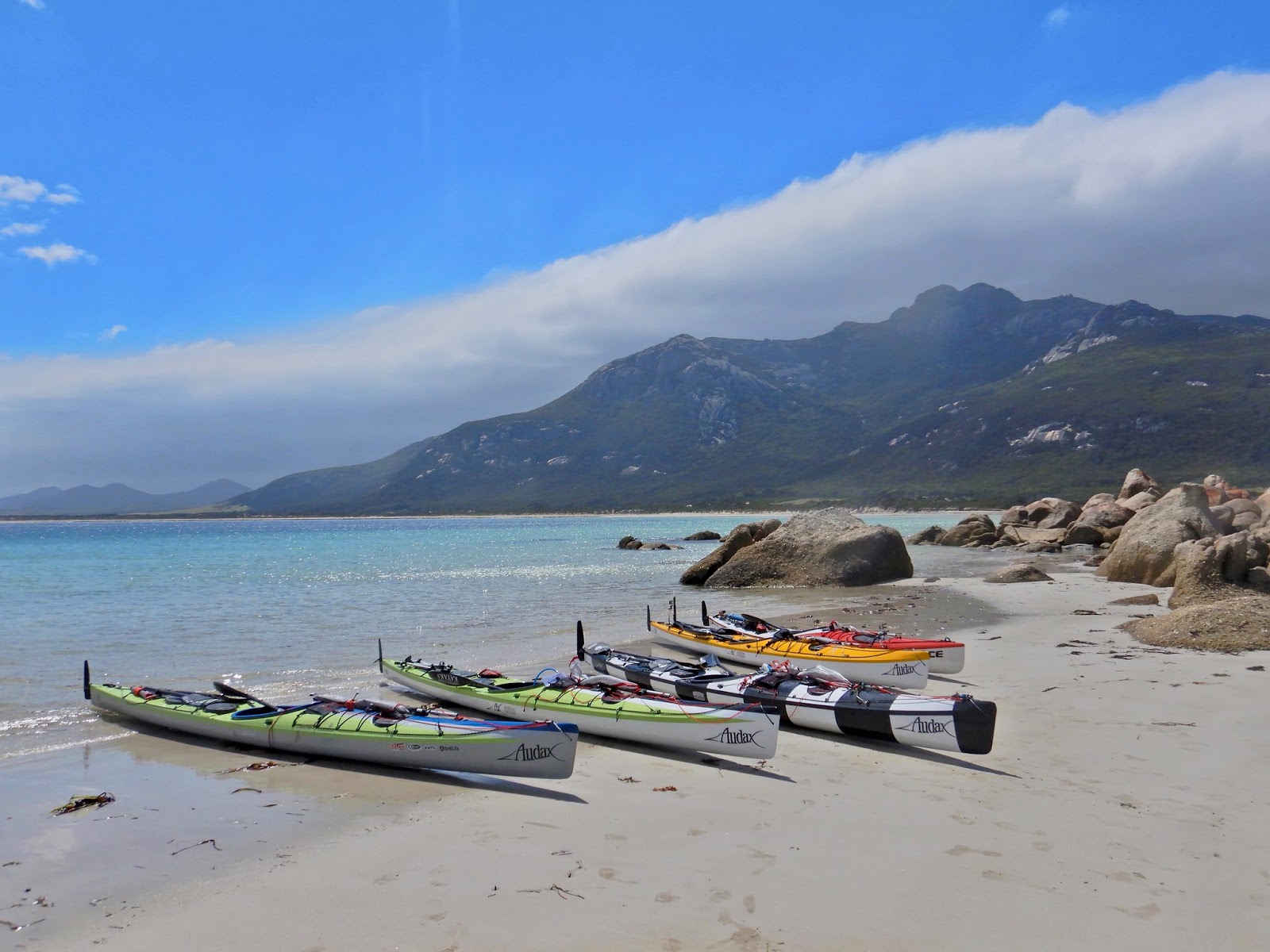
Trying to simplify my response has taken some thought, but here is my collection of the essential elements a good modern fast tourer has to have. 

First off, they have to have a terminal hull speed over 9.5kmh. That is, be able to sustain that kind of speed in calm conditions over an extended period, rather than just a short burst. That's not so much because you ever really push that hard or fast, more that if the hull does have those sorts of hydrostatics, it's probably going to be quite a bit more efficient than average at the 'touring' output levels most of us work at on the sea. The Audax, for example, has clocked a 10 hour 32 minute Hawkesbury Classic (111km flat water overnight race on a river with neutral flow), and the Epic 18X has an even faster time in the same race.


Second, they have to be stable whether they're being paddled as a day boat, unladen, or full of gear for an extended trip. I'm a very poor judge of what others consider stable, but my test is to see just how much micro stuff I can get done on my own in rough water with the boat empty, without having to raft up with someone else. 
As a minimum, fetch a helmet from the day hatch, change over a water bladder below deck, sort out something which might be essential to my own safety, in bouncy water, without getting the wobbles. 
Our experience has shown that any harder-heeling hull qualities in a fast tourer's hull can make the stationary exercises we all need to carry out on the sea exponentially more difficult.


And finally, they have to be able to go downwind. All the biggest days on the sea are done in following seas, and if the boat misbehaves, buries, squirrels around in fast downhill conditions, then your day becomes miserable. That might sound pretty simple, after all they've all got a rudder, but the subtleties in how they perform downwind is what separates the great from the ordinary, in my opinion. If a fast tourer doesn't go like the clappers downwind, then it's not the real deal.


It goes without saying that as a tourer, they also need to able to carry gear with little or no influence on the performance of the hull.

Brit style manoeuvrability is a bonus, but not a necessary element, considering the job these boats are designed to do. That said, if you have a decent set of skills learnt in a gear-shift boat, application of the same set of core manoeuvring skills, in a well designed fast touring hull should get you the same boat control, just not as acutely. 

It's no coincidence that the pick of the crop have a rudder that can be fully retracted when manoeuvrability takes precedence over speed & efficiency. Think about when you need to manoeuvre in a hurry & you'll understand why this is such an important design feature.
We've heard mumblings of the old-school view suggesting these designs can be difficult without a rudder as an entire genre. Our response to that broad claim is to point out that they are as difficult without a rudder as the vast majority of skeg boats are in a crosswind, if the skeg fails, and much better performing than the boats that had rudders fitted historically because they were found out to be particularly poor trackers in following or quartering conditions. 

A rudder is a piece of gear that is to be maintained, checked and serviced like anything else on your kayak. To sacrifice the performance and ease that a fast touring kayak offers, to the sluggish and uninspiring performance of a boat that tracks at the expense of almost everything else because one day, maybe, your rudder might fail, seems like a 'worst case scenario' paranoia run wild. 

It is a very traditional sea kayakers way of thinking, and in many respects predates the reliability and serviceability of rudder systems like the Smart Track transom mounted design used on the Pace, Audax, Taran and now the Epic 18X. It's mostly borne of no experience whatsoever in these new, quite exciting designs that have turned much of the old performance possibilities of a sea kayak on it's head, but there will always be an old guard prepared to defend what's always been. Our advice as always, it get out and try them for yourself, in almost every single case since the release of the Audax as an example, test paddlers have remarked on the stability of the kayak, as something that they were not expecting.
As to the designers, the very best fast touring boats come from a long heritage of rough water paddling experience. Think Aled Williams & the Pace series, Greg Barton & Oscar Chalupsky & the 18X, and newer boats like our own Audax and Azure. These designs are conceived, plugs built, then tested and tested in a wide range of conditions to iron out any kinks in performance. Each of the established fast touring designs has been honed from the original form to something quite different by the time it's been released for sale. 

This rigorous testing and prototyping is the essential element in what goes into making an Azure or Audax what it is, and can't be underestimated in importance. Without this kind of testing in the hands of skilled and experienced paddlers, you can bet the boats would have big gaps in their performance. As a consequence, all of the fast tourers these guys have designed, coming from peerless experience in both paddling & boat making, means that when you finally get them on the water, you've got the genuine article. If you're contemplating buying a fast tourer, with the genre so recent, find out who designed it, what their experience is, it all matters.
We hope we've inspired to you to think outside the box, get out and try something that may very well challenge your whole idea of what a sea kayak can do!


Monday, 15 September 2014

1000 Myalls Away......

"Estimated time of arrival 1.30 pm
Been up before the sun and now i'm tired before i even begin.
(now you're flying) i got so much work in front of me,
(really flying) it stretches out far as the eye can see."

Apologies to the Hoodoo Gurus.....


I was lulled back to the Myall Classic, a festival of paddling that encompasses a 12km, 27km or 47km race along the beautifully scenic Myall River a couple of hours north of Sydney, with the promise that 'this year the tides are going to be great'. Last year's Myall was hard, 30km of 47km by my count, into the teeth of the tide, but this year, well one nameless bloke - Steve Dawson - even said it was going to be like a magic carpet ride home from the 23.5km turn.
Race briefing
Sure enough, the tide tables looked very nice, a strong flood tide to take us down the river to the turn, then a building ebb that should have been honking by the time we careened across the finish line, crowds lining the banks cheering madly while we sprang forth from our boats, did a few push ups & then went for a warm-down jog & a stretch.
Tony lines up the early start line.
Let's just say that three weeks of torrential rain into a lake system several times the size of Sydney Harbour, with one skinny little brown river outta there, should forever-more be a consideration when there are softies like me entering these things, unused to the brutality of an opposing flow for hours on end, and not a frigging wave in sight. 
The 9am 47km race start
I'd describe the journey in detail but my counsellor has told me to give it some time before I peer back into that dark place.....

My own race was a great shake down for the Hawkesbury Classic, & I'm now nearly certain I'll do that race in my V10. Comfort, ergonomics, and my hydration & nutrition system were all put through the wringer & came up green. One thing about paddling 47km under race conditions, you find out every likely cause of pain & anguish, and can then spend the 6 weeks before the Hawkesbury tuning them out. 

I had one incident about 2km from the end when I noticed a K1 paddler having some stability issues on the final stretch adjacent to Swan Bay, where a brisk easterly was tossing up a short beam chop. I changed direction to tail the boat and was only a hundred metres behind when the inevitable capsize came. No worries I figured, if there's one thing I know how to do it's an assisted rescue, but the complexity of the situation dawned on me as I rafted up. With no grab lines on my ski or the K1, it was a battle to get the kayak over my lap to try & drain it, and even when I managed that I realised I was no chance of emptying the flooded shell, not to mention actually assisting the paddler back into the cockpit. I figured the only thing to do was to set up a rafted contact tow & let the wind take us to a set of mangroves some 200m to the west. Lionel turned up in a sea kayak shortly afterwards & we managed to wrangle the K to the beach, whereby we emptied it & the paddler carried on with a pretty fearless attitude to the finish. I now know why most K1 races happen within short swimming distances from a safe shore!
The Dawson's ride the magic carpet home.
The marathon crowd themselves, maybe because their chosen pastime is one which less tests, & more reveals character, seemed to revel in the conditions. I moaned loudly to anyone within earshot during the event and was told to shut up & paddle, more than once, and fair enough too! While other racing disciplines around the place wax & wane in their popularity, marathon is positively booming, and I reckon it's because of what happens off the water. Paddlers are mostly affiliated with a club, the clubs seem to be built on the social side of the sport, and everyone works hard 'on the field' and celebrates each other's accomplishments on the river banks. The whole thing has plenty of soul.
Anne finishes.
Bob Turner, Tony Hystek & the crew from Paddle NSW did a great job running the event so smoothly, managing nearly 300 paddlers & keeping pained smiles (or maybe they were grimaces) on most everyone's dial. It's an event we're pround to be associated with as a sponsor & one for your bucket list.
Finished, looking a hundred dollars.

Friday, 29 August 2014

Rob, Matt & Gazza - Highs and Lows on the Capricorn Coast

Here's Rob's account of his recent trip around the Capricornia Coast with Matt & Gazza....

The Plan
The plan was to attend the Keppel Bay Kayak Symposium and then sneak an extra week out of our busy schedules to enjoy some paddling on the Capricorn coast. I would paddle with Gary and Matt with the stretch objective of reaching Mackay via some of the more remote Islands beyond Shoalwater Bay.

Meanwhile Sharon would explore the Keppels with Anne and Alan and maybe even get down to beautiful Hummocky Island in the south.


With such a tight time frame we had little slack for weather days and as the symposium drew to a close it became apparent that strong cross winds and heavy rain from an approaching complex weather system would likely require us to modify our plans as we paddled in opposite directions out of Keppel Bay.

Retirement Paddling
Matt, Gary and I launched from Yeppoon the next day into a strong and building SE wind. As we portaged over the foredune I saw the air was heavy with salt haze and I cheered at the densely packed whitecaps that filled the horizon. I have enjoyed many thousands of tropical sea miles surfing or sailing these short steep waves in my kayak and this was shaping up to be a lively start to our adventure. 

Matt had previously avoided paddling in the tropics on the basis that he would save the easy paddling for his retirement and as he punched out to set sail I couldn’t help but wonder if this was what he expected when I invited him along for a cruise.

Surf?
Paralleling the coast and heading north toward Corio Bay we became more exposed to the longer swells that sometimes sneak through the Great Barrier Reef. Locals explained to us at the Symposium that around a hundred miles east of Yeppoon there is a break in the reef between North Reef Lighthouse and a reef complex listed on the maritime charts as The Swains. With the right swell period and direction locals take their chances with crocs and sharks to surf the Corio Bar and The Big Dune Surf Reserve just beyond. Officially Agnes Waters well to the south of here is the end of any real surf on the North East Coast of Australia but the wave action on the outer bar at Corio Bay was way too fast and heavy to be local wind waves and we found ourselves beating out to sea to avoid some seriously high walls of water.

Beyond Corio Bay we were surprised to find ourselves being sidesurfed by a couple of big swells breaking heavily in the shallow water; camouflaged by the mess of whitecaps, these breakers seemed to be hiding in amongst the chop. According to my GPS we were sustaining speeds in the high teens for most of our second hour and hitting peaks in the high twenties (kmh)!

As five rocks emerged out of the afternoon glare we moved in closer to shore picking our way through the breaks and eventually surfing into the sheltered southern corner of the beach to investigate a leak in Gary’s boat. He had finished the day with his boat low in the water and his stern awash. In true Gary style he took this serious problem in his stride but we knew we would have to investigate this before heading out again.

The Worst Campsite Ever!
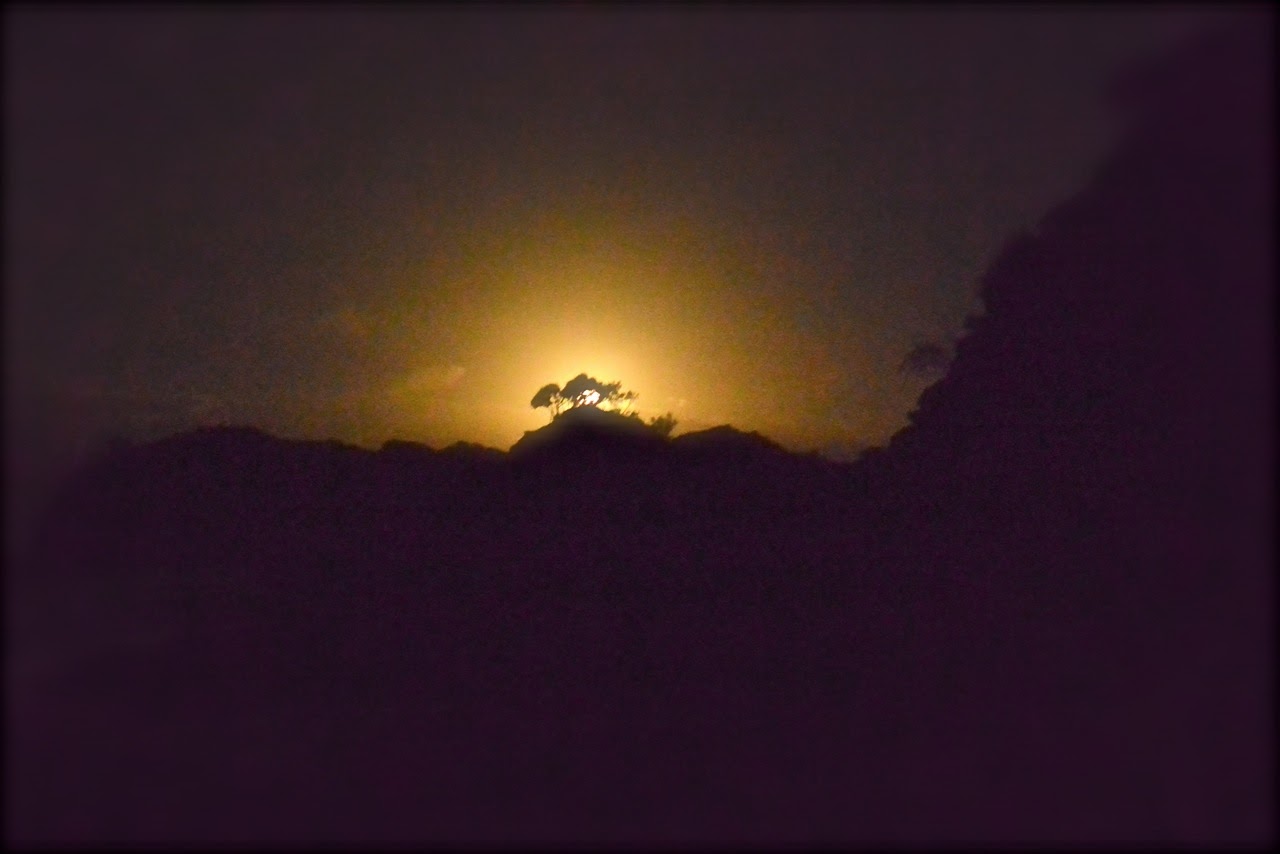
Camping at Five Rocks was a tricky business; the only spot sheltered from the driving wind was tucked under the dunes in the southern corner but on spring tides with a surf running this would be underwater. Fortunately we were a couple of days after springs and the water mark from the previous nights high gave us hope that we could camp on piles of pumice, driftwood and plastic flotsam without being swamped. The moon rose large over the tiny stand of twisted trees perched on five rocks bathing us in light.
There were a few anxious moments with the occasional bigger set sending waves within a metre of our tents but we all slept well as the water receded through to sunrise. Despite the shelter and the view both Gary and Matt rated this campsite amongst their worst ever!

By morning my tent fly was flogging in the wind so I knew our SE was now a fully-fledged Easterly and had ramped up another notch. The new day greeted me with a sand blasting as I exited my tent.  

With Gary’s boat to fix and spindrift dancing up the beach I moved my camp deeper into the driftwood and pumice pile and settled in for a leisurely breakfast.

The morning forecast was not too promising with a couple of days of heavy rain ahead and more strong easterlies (crosswinds) slowly moving to Northeast (headwinds).

By middle of the day Gary had isolated the leak to a wear point caused by a custom rudder he had retrofitted a couple of years previous. This was hard to find but easily fixed with epoxy putty and sail tape. The previous day he had taken about 30 litres on board through this fracture but with the repair set, Gary went for a surf and much to our relief the repair was watertight.

Walking, reading and staying out of the wind were order of the day with dinner under Gary’s tarp as the drizzle set in and the tide trapped us again on our little patch of higher ground against the dunes.

Matt even tried his hand at carving some pumice.

Although it seemed our weather window would not open in time for us to finish the trip I still wanted to push North so that at least we could find a better camp for the heavy rain ahead and see a little of the beautiful coastline within the boundaries of the Shoalwater Bay Military Zone.

Matt and Gary are two of the hardiest sea paddlers I know but neither were impressed with my idea to head out to Freshwater Bay, especially as it seemed likely that we would not make Mackay in the allocated time. When we finally hit the beach I had a few doubts myself as I rolled up after being surfed backwards during a badly timed breakout. The next 4 hours provided some of the most engaging, technical paddling I have done in North Queensland with real clapotis and a few overfalls around the Island off Cape Manifold.  I had timed our launch to hit the Cape at slack water but arrived a little early only to find a fast ebb current working against the swell and across the wind.

As we paddled through the gap between the rocky spire and the islet that guards the southern corner of Freshwater Bay I looked up to check if the Sea Eagle nest we had seen in 2007 was still there, sure enough the big birds hovered aloft guarding the nest as we ran a couple of not so small waves into the relative calm of the bay.

Tough Decisions
Setting up camp we disturbed a death adder. Drawn by its beautiful markings but repelled by its potentially deadly bite we were glad when it decided to hunt elsewhere. During the rest of the afternoon and evening the rain was relentless with the only other noise being the occasional screeching and snorting of a big “razorback” boar rooting around in the undergrowth.

As we looked out to sea from our forested refuge, Quoin Island and the hills behind Port Clinton disappeared in sheets of driving rain and the readings on Matts barometer continued to plummet. We retreated to our camp to listen to the forecast on Matts SSB radio and make some tough decisions.

It was day four. We were camping where I had hoped to be at the end of day one. Without even listening to the forecast, we could all see from conditions beyond the bay that we would not be able to head north until the next day so we would not reach Cape Townsend until day five or six. It is at times like this that valuable lessons in humility are learnt or re learnt; the bravado of the fast short adventure that has minimal impact on life back home was clearly not going to work this time. I must admit I even wished we were trapped out on one of the islands with no choice but to wait for the weather to clear. Beyond Cape Townsend the only viable option would have been to sit tight and then keep heading for Mackay, but here so close to Keppel Bay with so few days left, Matt and I really couldn’t justify pushing on.

As we paddled back around Cape Manifold I reflected on the trip so far. We had paddled 3 of our first 4 days in strong conditions and although we hadn’t gone far we had experienced so many challenges on the water. We had managed wind, waves and tidal flows on all quarters and could still crack a joke or two at the prospect of surfing through the fog for yet another night at “that campsite”

Positive Energy
After another rainy night the next day dawned clear and cool with an offshore crosswind for a change. As the sun rose and clouds lifted I felt a little melancholy for the trip that might have been, but the positive energy of Matt and Gary soon had us sharing stories over breakfast out on the beach.

From here the trip took a very different tack. Gary, who had plenty of time, headed back to Yeppoon to pick up the rest of his journey out of Mackay, paddling solo through the islands further north. Matt finally found his tropical paradise and camped on Conical Island enjoying the solitude and beauty of a starlit sky on his own whilst I had a rendezvous with the lovely Sharon and her group over on nearby North Keppel.

Matt joined us the next day for a circumnavigation and cave exploration to round out a very diverse week on his first tropical paddle.


On returning to Yeppoon I felt satisfied that we had done our best with the constraints of time and conditions, we discovered later that other groups had travelled all the way up to Keppel Bay and not even launched. I was grateful to have the team and the techniques to paddle despite the weather and still not exceed our limits.

Back home, looking at the charts as I pack my gear away my eye is drawn once again to the remote, seldom visited islands north of Cape Townsend: The Dukes, The Percys and The Guardfish Cluster. Next time I will go back armed with more days to spare and a fresh determination to reach them and experience their solitude.

For now I have pictures to remind me of the beautiful places we visited and good times we shared, especially some of the views when the sun finally shone on the “worst campsite ever”:
 

Tuesday, 5 August 2014

The Peak UK Tourlite Shorty - Reviewed by Ocean Paddler Magazine

Read the OP Review HERE

One of the surprise packets of the cooler months has been the huge popularity of the Peak UK Tourlite Shorty paddle jacket. 

It has a bunch of stuff going for it, even allowing for the great price at just $129 for a premium piece of cool weather kit.

In our climate it's a warm enough jacket for all but the rare howlers, when most of us are watching the action from behind a window anyway.

It's more waterproof than a non-cag paddle jacket, because the ingress point for water isn't around your wrists, it's above your elbows. This means any splash from a wave or your paddle won't slowly allow cold water to seep through, always a risk with a long paddle jacket that doesn't have tight gasket seal.

It's lighter than a traditional heavy duty cag, and being short-sleeved is practical as a warm weather shell on blustery summer days, or for immersion activities like surfing, where short high-octane sprints are interspersed with long periods sitting still, wet, in the wind.

We've found that that in this mild Sydney winter, the Shorty has been the go-to jacket, worn in concert with the Peak UK Thermal Rashie.

The UK's Ocean Paddler Magazine have written an excellent review of the Shorty which you can read HERE. You can buy the Peak UK Tourlite Shorty paddle jacket through our online store HERE, for $129.00 including delivery nationally.

Friday, 11 July 2014

Rob Mercer - Five Years in a Valley Nordkapp


It was wintry afternoon for Sydney with a forecast warning of strong southerly winds, 2 to 3m seas and long period easterly swells to 4m, the air temperature was a brisk 10C and I had no doubt that we would have the launch site to ourselves. Parking was easy and sure enough some of the regulars had already setup their boats and retired to the café for a hot chocolate foregoing their usual pre-paddle paddle. Upon seeing the sea kayaks lined up my first impression was what a fine picture these boats made; bright colours against a steely Harbourscape and then I realised what was really special about this scene; of the seven boats already on the beach all were Valley Nordkapps or Nordkapp LVs. On easier weeks some would have been in faster boats for a workout or more manoeuvrable boats to play but in the more challenging conditions of steep seas over rebounding swells these seven experienced paddlers had defaulted to their Nordkapps; a serious boat for serious conditions.

 So much has been written about this boat, its history, its evolution and its legacy that it is often referred to as a benchmark for describing the performance of newer designs, it figures heavily in the fleets of those with several boats and even where it is the first serious kayak purchased it is often the last one sold.
Neil using his Nordy where it's meant to be used.
My personal experience is mainly with the composite standard size Nordkapp in its most recent form. I believe the current design was last tweaked in 2008. When I say “tweaked” it seems that the cumulative effects of almost four decades of these successive tweaks or incremental refinements has yielded a boat retaining the original elegant line and sea manners but in a much more user friendly form. Indeed, I have seen both fans and sworn enemies of the original design with the same look of delight at the predictable manner of the newer model, especially in turbulent and difficult waters.

The antithesis of recent competing designs with their radiused hard chines and almost flat semi planning hulls, the Nordkapp has very round bilges for a sea kayak. Subjectively it is very slippery in the water, it is not a boat that is easily tripped up by cross chop or breaking waves abeam and there is no “notchiness” in the stability profile of the boat. As a result it is responsive to active and assertive technique but less accommodating of those who are just along for the ride.

A classic icon of the sea, and the Sydney Harbour Bridge!
Much is made of the light stability of the Nordkapp but stability is a subjective term; underpinning it are theoretical concepts like resistance to various angles of heel. To a paddler in challenging water, predictability and responsiveness may be more valued attributes. After all it is how the kayaker and kayak work together that makes a design seaworthy. Those who proclaim a design stable or otherwise often forget that we only learn balance by challenging stability. The wider and less responsive the boat is to edging the less balance we will learn by paddling it.
 Ambitious novices prove the trickiest with regard to the issue of stability and balance. If the stability is too light they may never relax enough to develop good balance but if it is too stable they will develop very little balance at all and just become a passenger rather than ever feeling “at one” with their boat.
 Although not for everyone; I am surprised by the number of newer paddlers who have chosen a Nordkapp or Nordkapp LV as their first serious kayak and enjoyed the steeper learning curve that this has provided. 

At a personal level I find the boat quick enough in all but the fastest of sea kayaking company, manoeuvrable enough to be used to guide and instruct across a wide range of conditions and stable enough to take photos in rough water.  The rockered hull is well suited to steep seas; tracking is relatively loose and with the skeg up the stern slides easily for course corrections, allowing fast changes to hit just the right spot on the wave.

Its lean shape and sweeping lines are deceptive and if you use skinny dry bags it can carry plenty of gear for multi-day expeditions and yet still work very well as a day tripper for those in the manufacturers’ recommended weight range. I can’t think of a better boat to paddle out to Broughton Island or similar locations where carrying food, wine, water plus camping, snorkeling and camera gear need to be combined with the nimbleness to run the rocky features and sea caves when you arrive.

The seating position is very comfortable for me with enough bend at the knee to allow leg drive and enough contact with the thigh for good edge control and rolling. The back-band is really more of a lumbar support that encourages good posture when set up properly. There are adjustable pockets on the seat side plates that allow foam shims to be added for those with slim hips who need more contact.
 I recently sold my long serving Carbon Kevlar Nordkapp with it’s beautiful clear hull and tangerine deck to a keen buyer after a second hand boat. After about 700 days on the water it is weather beaten but still going strong and I wanted something new. So after much deliberation what do you think I have replaced this classic design with?

Another Nordkapp of course!


Rob Mercer, July 10, 2014

The Velocimiser Sea Kayak Foil Rudder

After two solid years of R&D, we can finally announce a series of successful sea trials of our new foiling sea kayak rudder, The Velocim...