Thursday, 23 October 2014

Hawkesbury Time!


Two days to go to the 2014 Hawkesbury Classic, an event we are both sponsoring and competing in, Rob with Mark Hempel in an SLR2 Double kayak & me in my trusty V10.

Rob had more or less sworn off the hard grind of flat water racing, but the temptation to go hard with a guy as strong & determined as Mark has seen him relent & have a crack. I'm pleased they'll only be within earshot of me for a few hundred metres as they likely shoot past, because 2 hours paddling alongside Rob in flat water training can get very trying as he gradually succumbs to the grind & begins to complain loudly. 10 hours doing the same thing, in the same boat? Best of luck with that one Mark!

This year promises - in a very large set of inverted commas - "a much better tide" than the last two years where at least the later starters have copped two incoming tides. Considering BOM can predict a seriously complex East Coast Low such as the one that ripped through Sydney last week nearly to the hour, I'm mystified by the lack of accuracy in the forecast of a tide that methodically changes direction every 12 hours on nice little river. So, after cleverly devising my strategies around these tidal predictions for the past two years, despite Bob Turner telling me maybe 10 times that it was a dumb idea, this year I've resolved to trust only my GPS.

A few random observations from both Rob & I on training for the Classic, and applying that training to the actual race.

First, the monotonous pace of training for such a long endurance race has greatly eroded our ability when we get back out on the sea to accelerate. Weird as it may sound, all that training seems to have made us both go slower! It's simply explained by the gear change required to endure, as opposed to the interval-type paddling you naturally do on the sea, but a little unexpected. It's also hard! Paddling in the sea is so engaging, time flies, no two padle strokes are the same. On the river, it's relentless, mentally challenging, there are no free rides, no waves, a very tough exercise.

Second, we reckon you need to really gun it when the tide is going your way, because the difference in speed between trying harder against the tide, as opposed to trying hard with the tide, is substantial. Rob & Mark have noticed in Bob's flat-water specialist SLR2 that there isn't much of a difference in effort between going 9kmh into the tide, and 13kmh with the tide, whereas in my ocean ski, with a slightly deeper draft I really feel the resistance. They still find it hard to go any quicker than about 9.5kmh into the teeth of a tide though, which tells you something.

Third, with the foibles of the river bends & flow direction, a smart paddler will minimise the head tides by working out where those little back eddies are. In two attempts where I was well tuned into this phenomena I haven't managed to find out where they are. My advice on that one is if you see an old bugger going faster than you into the tide, even though he or she doesn't look to be trying harder, follow them! There is a lot to be said for experience & river-craft in the Hawkesbury.

Fourth, and thanks to Warren for pointing this out, the race is being held post-daylight saving this year, which means an extra hour of daylight & heat at the start. For me, with the forecast for the race start temperature close to 30C, I'll risk dressing lighter for the 60km to Wiseman's Ferry, and use a beanie to get me through the last hour or so to that watershed stop, when it nearly always gets very cold. A light paddle jacket from there should see me home.

Finally, assuming your form is good enough to propel you the 111km without injury, fuel is the key to a good performance. High energy, easily digestible food that preferably takes very little time to unwrap & eat works for all of us. A drink that you can stomach while exerting yourself that provides energy will also be much more beneficial than plain water. I've even gone to the trouble of filling gel dispensers rather than waste time opening individual sachets. The bad news is, if you haven't been training with this kind of fuel plan, it's too late, whatever you do don't deviate from what's worked in the lead up.
Mark's nutrition plan!
It's all very exciting, another Hawkesbury Classic to get my teeth into, and a first one for many, many years (not since he was 55) for Rob! This week I sent out a request for sponsorship, with a back story about my old coach, Barry Davison, who lost his battle with blood cancer earlier this year, which you can read HERE. I'm very humbled to report that friends & colleagues have contributed over $2000 to the cause, benefiting the Arrow Foundation. My target was $2000, so if the idea of further inspiring me towards pain & suffering brings a smile, it's not too late to donate through my sponsorship page HERE.

A sincere thanks to Hamish & the team at Kingsgrove Sports Centre,  Lyall & my old club mates at the Randwick Petersham Legends, DavidPaulBryceStevenJasonPaul, Singhy, John, Greg, Tim, Fali, Dino, Ian, Peter, Tiernan, Mick, Rollo, Selim, Emma, Rodney, Jess & the team from Wentwest, Groucho from CE Chapman Lawyers, Suzie @ Popink, Harry from Promotional IT Solutions, Birger & his team at James Harvest Sportswear, and Rosemary & the guys at Bottles of Australia for donating to my Hawkesbury paddle!

My target time? Anything with a 10 in front of it will do me!

Monday, 20 October 2014

111 Hawkesbury KM's for Davo.

This Saturday night I line up for my sixth Hawkesbury Classic, a 111km overnight race from Windsor, all the way along the Hawkesbury River to the Brooklyn Bridge (the video above records some of the action from last year's race).

I've been racing in this event since 2002, when I punted down the river in a wide, slow old plastic kayak in the excruciating time of 17 hours, 34 minutes. I've said it before, but that first Hawkesbury remains one of the hardest things I've ever done.
The start of the 2012 Hawkesbury Classic.
The past two years I've set myself the target of beating 11 hours, paddling our fastest true ocean-going sea kayak, the Tiderace Pace 18. In 2012 I did 11.05 and last year 11.08, so both times I've been forced to race the whole bloody way with my eye on the GPS knowing I was ever so slightly behind my target. Not an easy way to spend 11 hours I can promise!

This year I've switched boats to an ocean ski. It's a new challenge as I'll be more exposed to the conditions on the night, paddling a craft with no deck, but one that should see me down the course underneath the 11 hours I've set my sights on for the past two years.

It's run for the benefit of a charity, the Arrow Bone Marrow Foundation, just as most of the big events thesedays are linked in with a cause of some sort. Whilst I'm always respectful of this essential fund raising source, it does get a bit bewildering after a few different races to even remember which one is for what, so I mostly resist the call to send out fund raising notifications on social media etc.
The life & times of Barry Davison.
Last year however, when I sent the link for my Hawkesbury Classic fund raising page, I was surprised by the speed and amount that was donated by my old cricket coach at Randwick, Barry Davison. Baz was a fantastic coach who came to Randwick when we could at best be described as under-achievers, and in three seasons  took us to numerous premierships, two Sydney Club Championships and had a hand in turning several good first graders into Sheffield Shield players. At his first training session on taking over, he started by saying 'You Randwick blokes have a reputation for being pissheads & womanisers, and that's all going to change'! He then asked us to split into two groups for some fitness drills, whereby one of the club characters said loudly, 'Pissheads to the left, womanisers to the right'! Guess which group was the biggest?

He posted a lovely note with his donation, pointing out that his quality of life and roller coaster ride of dire predictions followed by strong recovery was facilitated directly by the hard work & research of the good people at the Arrow Foundation. Sadly Barry's rare bone marrow cancer took him from his loved ones earlier this year. Happily, before he passed away we all had a chance to send him off at a brilliant tribute night where he received a lifetime coaching award from Cricket NSW, and made a lovely speech to the gathering which rounded out his community involvement in the game he loved with great dignity.

Listening to Barry's catalogue of treatment for his disease, the costs of the drugs, the time spent hooked up to various machines administering measured doses of what at times were seriously experimental treatments that the Arrow Foundation had a direct hand in creating. He was in awe of the dedication of their doctors & scientists, and was pretty stoked that my pain in the Classic was going to be for the gain of others suffering with diseases like the one he endured.
Feeling the pain at the end of 100km
That may have also been the idea that he wasn't able to inflict much pain upon me as a cricket coach, me not being the most umm, dedicated of trainers, so he was quite pleased to hear that karma hat got me....
So, this year, after speaking to Barry's wife Sandy & his sons & teammates of mine, Greg & Rod, I'm going to make a hoo-ha about the fund raising aspect of my race, to honour & remember the very brave & generous man that was Barry Davison. I've targeted $2000 as a good result, but it would be great to exceed that amount. The race is this Saturday evening, and you can donate to the Arrow Foundation cause & sponsor my efforts by clicking the link HERE. Times are tough and I appreciate any support you can spare, and I in turn pledge to race my ski like it was stolen!

Friday, 10 October 2014

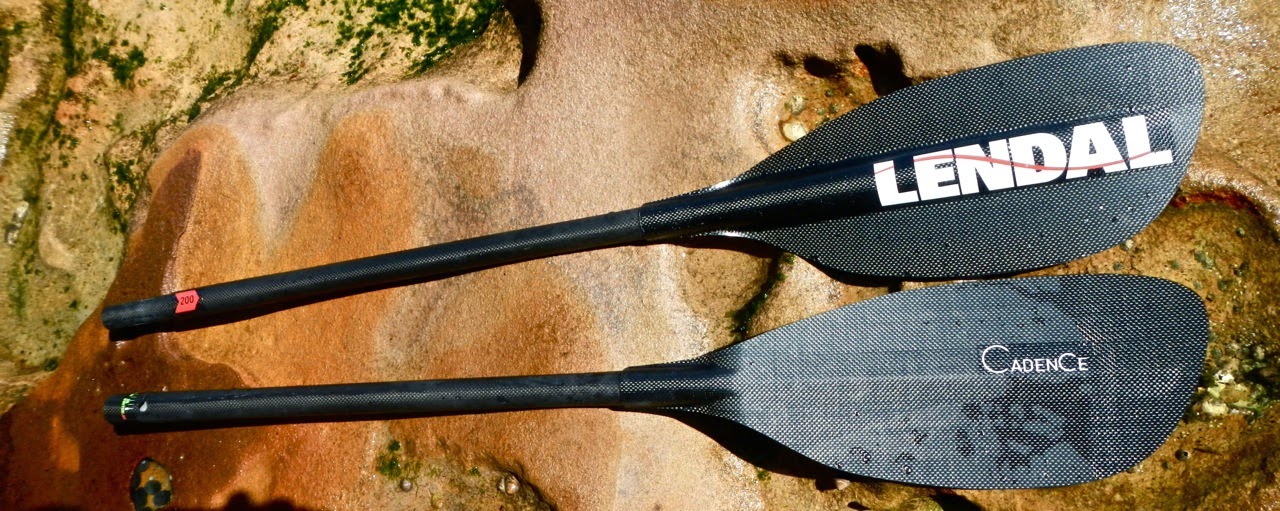
Sharon Betteridge on the Lendal Cadence Paddle: The Little ‘Big’ Paddle

Some thoughts from Sharon Betteridge on the brand new Lendal Cadence paddle.

"Expedition Kayaks recently took delivery of the new Lendal NA Cadence paddles, and this week I have had a chance to try it out. Our current stock is the full carbon model so this review is based on this ultra lightweight premium build.

Weight:
On picking up the Cadence, my first impression was how light weight it was; and when I popped it on the kitchen scales it weighed in at a mere 615grams! This puts it in the premium ultra light class.

Blade construction:
The Cadence is beautifully made. It certainly looks sleek, being a flawless full carbon layup – with a satin finish on the blades and a matt finish on the shaft. 
The spine of the paddle blade is a raised ridge on the back face rather than a foil section like the Storm and X-range but the ridge is large and nicely tapered right out to the tip of the paddle so that although this makes the paddle more economical it retains the nice buoyant feel of it’s two larger foil back predecessors.

Shaft construction:
Although the shaft feels a little more flexy than the other Lendal NA paddles it retains the ergonomic cross section unique to these paddles, with the indexing moulded into the shape of the shaft. It is not just ovalised it is actually shaped to sit easily into a lightly closed hand. It feels great in my hands with its ergonomic shaft, and the ridge sitting comfortably under my knuckles.


On the water:
At 600 square centimetres I expected the blade to be fairly easy on the catch, and, as it is smaller than my current blade, I feared it might be too small. But when I took the Cadence out for a test I was surprised at the power of the catch. It has a good initial grip on the water, and the shorter wider blade allows quite a powerful catch, but the overall smaller blade area with its modern torque shape pulls easily yet definitely through the water giving plenty of power for an efficient forward stroke and allowing a good cadence for paddling distance. There is no flutter as the blade travels through the water and the exit is clean and smooth.
The ergonomic shaft is comfortable to hold and allows me to maintain a light grip and, with the defined ridge, allows feedback with blade angle when blending strokes for maneuvering, and for bracing strokes and rolling.


In summary the Cadence is a beautifully made, lightweight, well-balanced paddle that I a really enjoy using. Try it, I am sure you will impressed!"


Sharon Betteridge, October 2014.

Friday, 3 October 2014

Introducing Dolls Point Paddlers


Dolls Point Paddlers hold their inaugural paddle next Thursday, an event that will become a weekly twilight time trial run along the foreshore of Botany Bay.

Borne out of the idea of establishing a weekly paddle which encourages surf ski & sea kayak paddlers out on moving water, in typical summer sea breeze conditions, to foster friendly competition, and help participants develop rough water skills that they may not have the opportunity to develop on their own or with their regular paddling mates. 

That's the on-water bit.....! Additional to this athletic & friendly competitive handicap race, I've always considered the post paddle meeting place, the fostering of a community, and the development of something that attracted members because it was fun, to be an even higher priority.

So, the DPP have affiliated to the 87 year old Georges River Sailing Club, with their spectacular premises on the sand at Sandringham beach, and their sunlit open air balcony for a post paddle gathering.

The idea is to provide an early evening race, something you can drop into on your way home, paddle your race, have a cold drink afterwards & slap a few backs, and still be home in time to preserve the peace.

The races are free each week to Paddle NSW members, who cover all on-water insurance & compliance. A one year membership to the Dolls Point Paddlers, including membership to the Georges River Sailing Club  is $140. Membership of the club includes $35 in redeemable vouchers, use of the facilities including hot showers, a car park virtually on the beach, an excellent bistro with a mean $12 steak, and view to die for. Compared to playing golf or joining a gym it's a pretty attractive package....


The season program, at this stage running for the entire daylight saving period, will include several trophy races, novelty events & a monthly presentation after the paddle by a local paddling identity. DPP offers a single trial race for paddlers keen to try out the experience, which costs $10 (to cover insurance only), and then to take part in future races participants will have to join. Races will be run within strict safety parameters, including a sweeper boat to ensure the safe return of all participants. There will separate divisions for sea kayaks & surf skis, but all boats must be suitable for sea paddling. The DPP isn't an initiative of Expedition Kayaks, just something I & a few local paddling mates have decided to start up over the summer & see how it goes.

For now we're limited to just 50 paddling members, so please feel free to get in touch or simply come along & give it a go. Last summer a group of stand up paddlers started a SUP Race from the GRSK on Tuesday nights, and it has quickly grown into a strong & vibrant club with a big membership.

As someone who always enjoyed the atmosphere of the post game 'dressing room', I'm personally looking forward to being part of a regular gathering of like minded souls, and doing the thing I love.

For now I'm the contact person, give me a shout at mark@talisman-marketing.com, or 0417 924 478. There is a FACEBOOK PAGE up & running & a website with full details coming soon. You can download the membership form HERE, but please note, you must be a member of Paddle NSW to participate in the races.

Thursday, 2 October 2014

The Sun's Out! What's Ahead for EK this Paddling Season

A short but wild Sydney winter has abated to the point that the fleece & Aquatherm can be kept in the fish bucket for all but the most crappy Spring days.

We use the quiet couple of paddling months each year to plan & allocate our time to a series of events & sponsored weekends & days among the kayaking community, and this year we have some hot irons in the fire.

First off, we are pleased to announce that we have full council & Waterways approval to conduct kayak & surf ski training on Botany Bay. These instruction sessions will include everything from calm-water boat control & stroke development, to forward stroke clinics, to intro surf ski, to lessons on rough water paddling in skis & kayaks, including the wonderful downwind training ground Botany Bay offers on a summer afternoon. Keep an eye on our website for details, launching later in the month.

We're also moving premises in early November, to a new warehouse in MIranda that will give us an enhanced retail space for customers who prefer to come & have a chat rather than order online. It means the 'secret handshake' appointments at our current Marrickville warehouse will be consigned to history, and we'll finally have a physical appearance to match our leading online presence.

We have some great community events planned, including the excellent 'All at Sea' weekend with the Sutherland Shire Canoe Club (now in it's third year), our continued sponsorship support of the Hawkesbury Classic, and a number of single day events with local clubs & pods of paddlers, aimed at developing safety on the sea. I'm paddling the Classic again this year, and Rob has teamed up with Mark Hempel to have a crack in a double.


And perhaps most exciting, we've been busy helping with the formation of a new local paddling club, the Dolls Point Paddlers. The formation of this club has been driven by a desire for a local paddling hub, affiliated to a licenced community club, which facilitates a weekly social time trial in the early evening, moderate water of Botany Bay, with a place to gather post-paddle for a cold beer & a chat with like-minded people. 

Essentially it's going to be an 'on-the-way-home-from-work' once a week summer paddle which allows paddlers less confident on their skis or sea kayaks a chance to get out in a summer Nor' Easter & pushing their boundaries within the safety net of an organised event. Details of this venture are all but finalised, so again, keep an eye out for membership details. And yes, this will be a club that welcomes sea kayaks, with the near certainty each evening of some moving water to paddle.
It's great to see the sun shining & the afternoon sea breezes beginning to build, roll on summer....!

Wednesday, 17 September 2014

What is a Fast Tourer...?


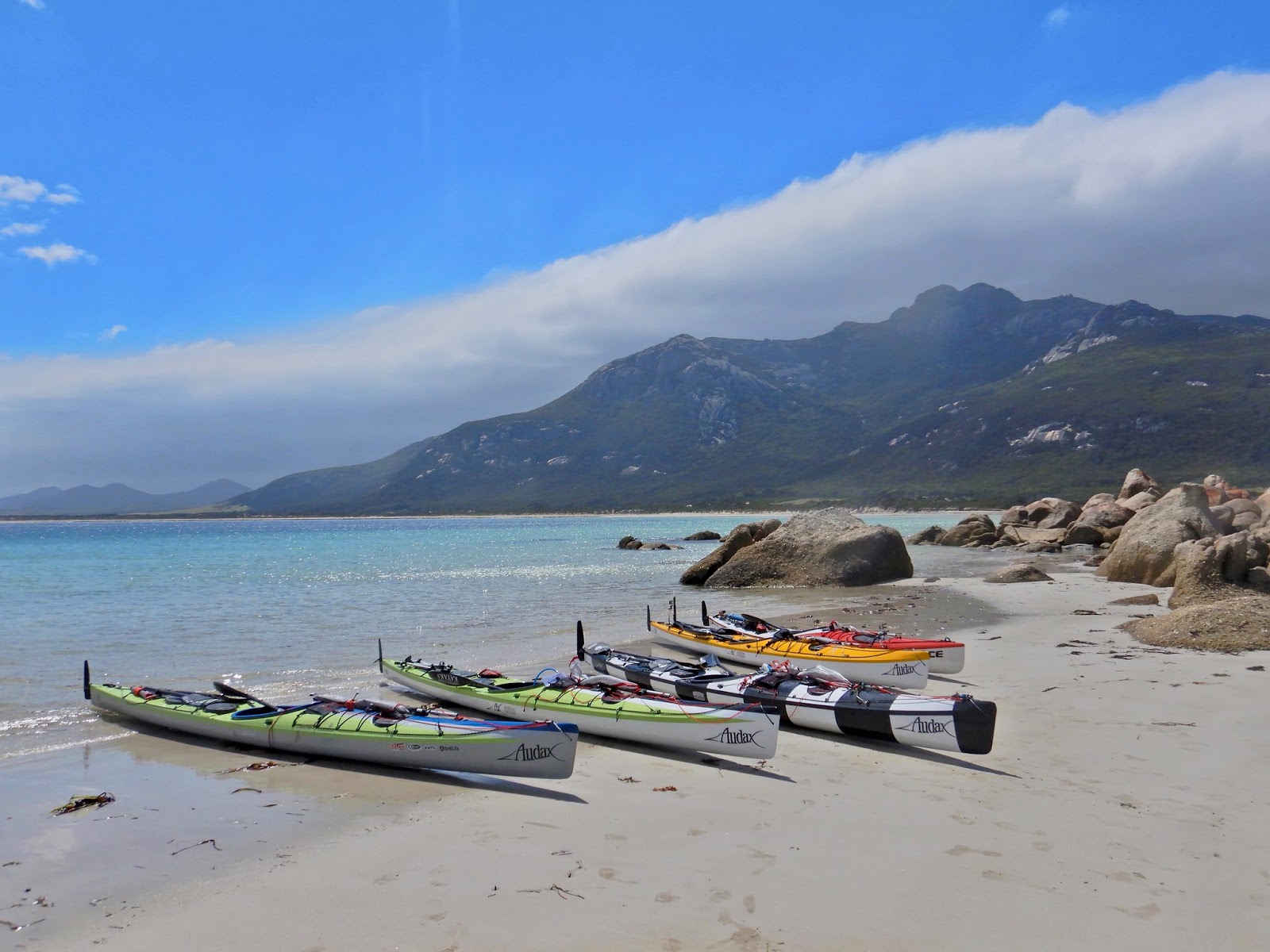
In my exposure to paddlers from a wide variety of paddle backgrounds & disciplines around the country, at the various events & races we attend as competitors, instructors & sponsors, an increasingly common question is 'we see you have the Audax, Azure, Epic 18X, Tiderace Pace boats, tell me about these fast tourers?'

I'm asked by surf ski dudes & dudettes who like the idea of using their good form & conditioning to actually go somewhere in their paddle craft, at the speed & style to which they are accustomed in their racing skis. 
I'm asked by old fellas with beards who are starting to feel the pinch & would like an advantage over their paddling buddies. I'm asked by new paddlers, who are time poor, who want a kayak as opposed to a ski, but want one that can be used for fitness as well as 'one day', that big expedition on their bucket list.

Trying to simplify my response has taken some thought, but here is my collection of the essential elements a good modern fast tourer has to have. 

First off, they have to have a terminal hull speed over 9.5kmh. That is, be able to sustain that kind of speed in calm conditions over an extended period, rather than just a short burst. That's not so much because you ever really push that hard or fast, more that if the hull does have those sorts of hydrostatics, it's probably going to be quite a bit more efficient than average at the 'touring' output levels most of us work at on the sea. The Audax, for example, has clocked a 10 hour 32 minute Hawkesbury Classic (111km flat water overnight race on a river with neutral flow), and the Epic 18X has an even faster time in the same race.


Second, they have to be stable whether they're being paddled as a day boat, unladen, or full of gear for an extended trip. I'm a very poor judge of what others consider stable, but my test is to see just how much micro stuff I can get done on my own in rough water with the boat empty, without having to raft up with someone else. 
As a minimum, fetch a helmet from the day hatch, change over a water bladder below deck, sort out something which might be essential to my own safety, in bouncy water, without getting the wobbles. 
Our experience has shown that any harder-heeling hull qualities in a fast tourer's hull can make the stationary exercises we all need to carry out on the sea exponentially more difficult.


And finally, they have to be able to go downwind. All the biggest days on the sea are done in following seas, and if the boat misbehaves, buries, squirrels around in fast downhill conditions, then your day becomes miserable. That might sound pretty simple, after all they've all got a rudder, but the subtleties in how they perform downwind is what separates the great from the ordinary, in my opinion. If a fast tourer doesn't go like the clappers downwind, then it's not the real deal.


It goes without saying that as a tourer, they also need to able to carry gear with little or no influence on the performance of the hull.

Brit style manoeuvrability is a bonus, but not a necessary element, considering the job these boats are designed to do. That said, if you have a decent set of skills learnt in a gear-shift boat, application of the same set of core manoeuvring skills, in a well designed fast touring hull should get you the same boat control, just not as acutely. 

It's no coincidence that the pick of the crop have a rudder that can be fully retracted when manoeuvrability takes precedence over speed & efficiency. Think about when you need to manoeuvre in a hurry & you'll understand why this is such an important design feature.
We've heard mumblings of the old-school view suggesting these designs can be difficult without a rudder as an entire genre. Our response to that broad claim is to point out that they are as difficult without a rudder as the vast majority of skeg boats are in a crosswind, if the skeg fails, and much better performing than the boats that had rudders fitted historically because they were found out to be particularly poor trackers in following or quartering conditions. 

A rudder is a piece of gear that is to be maintained, checked and serviced like anything else on your kayak. To sacrifice the performance and ease that a fast touring kayak offers, to the sluggish and uninspiring performance of a boat that tracks at the expense of almost everything else because one day, maybe, your rudder might fail, seems like a 'worst case scenario' paranoia run wild. 

It is a very traditional sea kayakers way of thinking, and in many respects predates the reliability and serviceability of rudder systems like the Smart Track transom mounted design used on the Pace, Audax, Taran and now the Epic 18X. It's mostly borne of no experience whatsoever in these new, quite exciting designs that have turned much of the old performance possibilities of a sea kayak on it's head, but there will always be an old guard prepared to defend what's always been. Our advice as always, it get out and try them for yourself, in almost every single case since the release of the Audax as an example, test paddlers have remarked on the stability of the kayak, as something that they were not expecting.
As to the designers, the very best fast touring boats come from a long heritage of rough water paddling experience. Think Aled Williams & the Pace series, Greg Barton & Oscar Chalupsky & the 18X, and newer boats like our own Audax and Azure. These designs are conceived, plugs built, then tested and tested in a wide range of conditions to iron out any kinks in performance. Each of the established fast touring designs has been honed from the original form to something quite different by the time it's been released for sale. 

This rigorous testing and prototyping is the essential element in what goes into making an Azure or Audax what it is, and can't be underestimated in importance. Without this kind of testing in the hands of skilled and experienced paddlers, you can bet the boats would have big gaps in their performance. As a consequence, all of the fast tourers these guys have designed, coming from peerless experience in both paddling & boat making, means that when you finally get them on the water, you've got the genuine article. If you're contemplating buying a fast tourer, with the genre so recent, find out who designed it, what their experience is, it all matters.
We hope we've inspired to you to think outside the box, get out and try something that may very well challenge your whole idea of what a sea kayak can do!


Monday, 15 September 2014

1000 Myalls Away......

"Estimated time of arrival 1.30 pm
Been up before the sun and now i'm tired before i even begin.
(now you're flying) i got so much work in front of me,
(really flying) it stretches out far as the eye can see."

Apologies to the Hoodoo Gurus.....


I was lulled back to the Myall Classic, a festival of paddling that encompasses a 12km, 27km or 47km race along the beautifully scenic Myall River a couple of hours north of Sydney, with the promise that 'this year the tides are going to be great'. Last year's Myall was hard, 30km of 47km by my count, into the teeth of the tide, but this year, well one nameless bloke - Steve Dawson - even said it was going to be like a magic carpet ride home from the 23.5km turn.
Race briefing
Sure enough, the tide tables looked very nice, a strong flood tide to take us down the river to the turn, then a building ebb that should have been honking by the time we careened across the finish line, crowds lining the banks cheering madly while we sprang forth from our boats, did a few push ups & then went for a warm-down jog & a stretch.
Tony lines up the early start line.
Let's just say that three weeks of torrential rain into a lake system several times the size of Sydney Harbour, with one skinny little brown river outta there, should forever-more be a consideration when there are softies like me entering these things, unused to the brutality of an opposing flow for hours on end, and not a frigging wave in sight. 
The 9am 47km race start
I'd describe the journey in detail but my counsellor has told me to give it some time before I peer back into that dark place.....

My own race was a great shake down for the Hawkesbury Classic, & I'm now nearly certain I'll do that race in my V10. Comfort, ergonomics, and my hydration & nutrition system were all put through the wringer & came up green. One thing about paddling 47km under race conditions, you find out every likely cause of pain & anguish, and can then spend the 6 weeks before the Hawkesbury tuning them out. 

I had one incident about 2km from the end when I noticed a K1 paddler having some stability issues on the final stretch adjacent to Swan Bay, where a brisk easterly was tossing up a short beam chop. I changed direction to tail the boat and was only a hundred metres behind when the inevitable capsize came. No worries I figured, if there's one thing I know how to do it's an assisted rescue, but the complexity of the situation dawned on me as I rafted up. With no grab lines on my ski or the K1, it was a battle to get the kayak over my lap to try & drain it, and even when I managed that I realised I was no chance of emptying the flooded shell, not to mention actually assisting the paddler back into the cockpit. I figured the only thing to do was to set up a rafted contact tow & let the wind take us to a set of mangroves some 200m to the west. Lionel turned up in a sea kayak shortly afterwards & we managed to wrangle the K to the beach, whereby we emptied it & the paddler carried on with a pretty fearless attitude to the finish. I now know why most K1 races happen within short swimming distances from a safe shore!
The Dawson's ride the magic carpet home.
The marathon crowd themselves, maybe because their chosen pastime is one which less tests, & more reveals character, seemed to revel in the conditions. I moaned loudly to anyone within earshot during the event and was told to shut up & paddle, more than once, and fair enough too! While other racing disciplines around the place wax & wane in their popularity, marathon is positively booming, and I reckon it's because of what happens off the water. Paddlers are mostly affiliated with a club, the clubs seem to be built on the social side of the sport, and everyone works hard 'on the field' and celebrates each other's accomplishments on the river banks. The whole thing has plenty of soul.
Anne finishes.
Bob Turner, Tony Hystek & the crew from Paddle NSW did a great job running the event so smoothly, managing nearly 300 paddlers & keeping pained smiles (or maybe they were grimaces) on most everyone's dial. It's an event we're pround to be associated with as a sponsor & one for your bucket list.
Finished, looking a hundred dollars.

The Velocimiser Sea Kayak Foil Rudder

After two solid years of R&D, we can finally announce a series of successful sea trials of our new foiling sea kayak rudder, The Velocim...